I always find a little fun digging through some of the less commonly focused on data points in our airman certification data. So here we go. I hope you find interest in some of these also!
Sport Pilot Certification Volumes
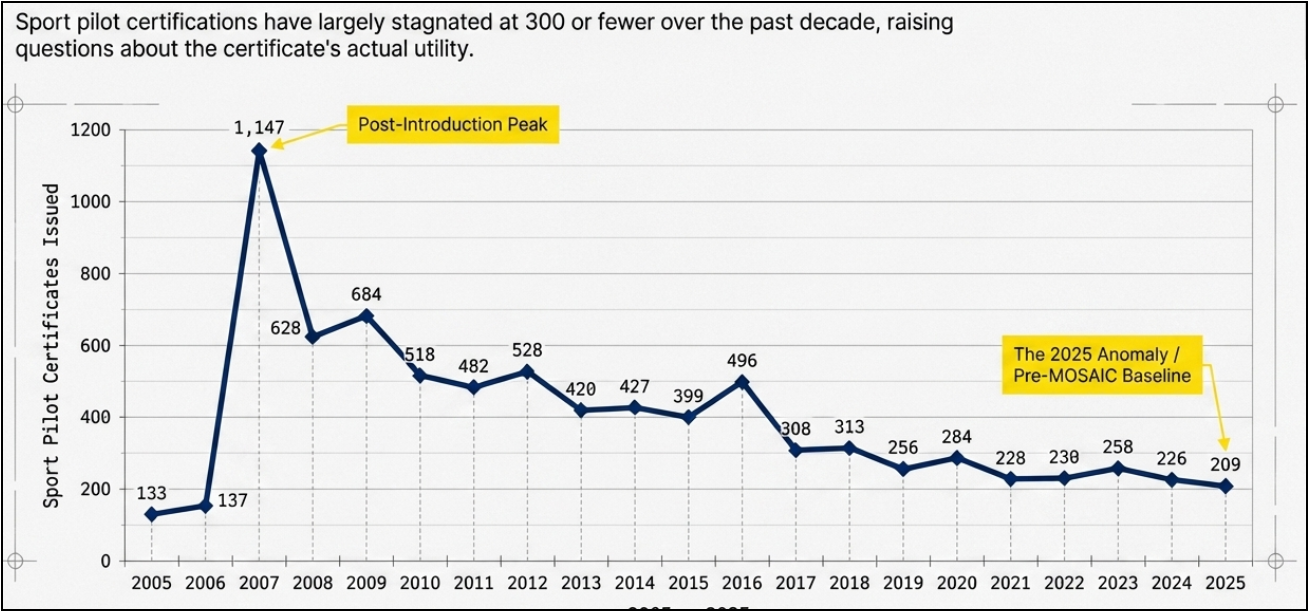
The implementation of new regulations related to sport pilots from the MOSAIC changes that went into effect in 2025 have the potential to turn around the declining number of sport pilot certifications we have been seeing on a year-to-year basis over the past years. We can see from the chart below that after the initial introduction of the certificate, there was a peak, but then it has tapered off significantly since it began being an option.
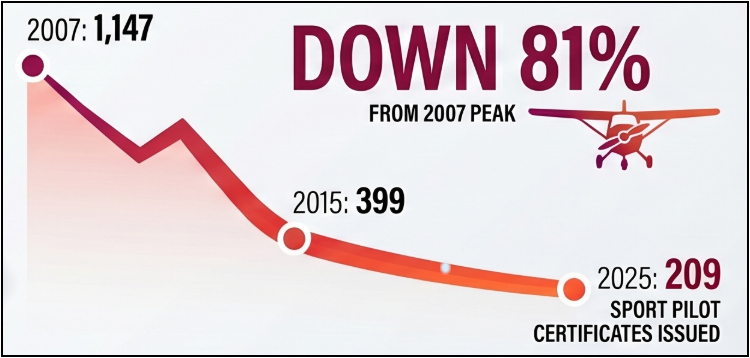
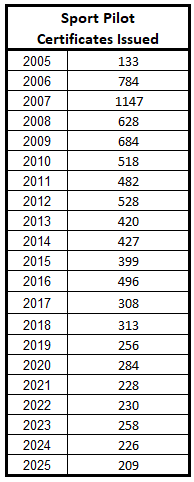
If we look at the total number of sport pilot certificates issued every year, the high point in 2007 looks like a very big anomaly. The certification level has largely remained at around 300 or fewer over the past decade.
The test will be if the new regulation changes see “new sport certifications” go up in 2026, or if we just see that pilots who are certificated at higher levels (private, commercial, ATP) elect to “exercise sport pilot privileges” with the new opportunities to fly larger aircraft and no longer have to have a medical certificate when flying personally in aircraft that can now be flown such as Piper Warriors or Cessna 172s.
There is a significant belief that this is more likely the case than that we see large numbers of new entrants into the pilot community seeking initial sport pilot certification.
One of the challenges is that the sport pilot certificate is still not truly an entry-level certificate that easily translates into upper-level certificates for career-focused pilots in training. A pilot certificated as a sport pilot can’t just “add on” a private pilot certificate. Since it is a different certificate level, they must meet the specific experience requirements for training received and solo flight times. As such, doing a sport pilot certificate doesn’t really help the pilot reduce the number of hours they would need to complete to get their certificates; in fact, it may increase them.
Perhaps at some point we can work as an industry to build a new pathway that might expedite that in the regulatory process, but currently, that is not the case.
That being said, even a couple of hundred more sport pilot certifications in 2026 would be a significant increase from a percentage base from what has been done in recent years.
I will certainly be interested to see if we see changes in this metric point of pilot certification in the upcoming years with the effect of the recent regulatory changes.
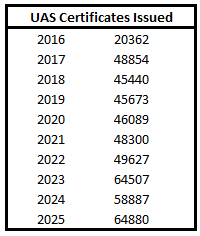
UAS (Remote Pilot) Certs Issued
In a previous post on this year’s numbers, I noted that I “took out of the numbers” for pilot certifications, the UAS, the remote pilot certifications. I did that there, so we were comparing the same metrics for pilot certificate issuances compared to before the UAS certificate became an option. But it is worth looking at how many UAS certificates are being issued each year.
Each year the FAA is issuing more and more UAS certificates for a growing hobby and professional industry. There is no doubt that this is a career path that continues to grow as the applications of unmanned aircraft continue to be leveraged, grow, and new applications are developed.
It is a big number, as you can see from the chart here.
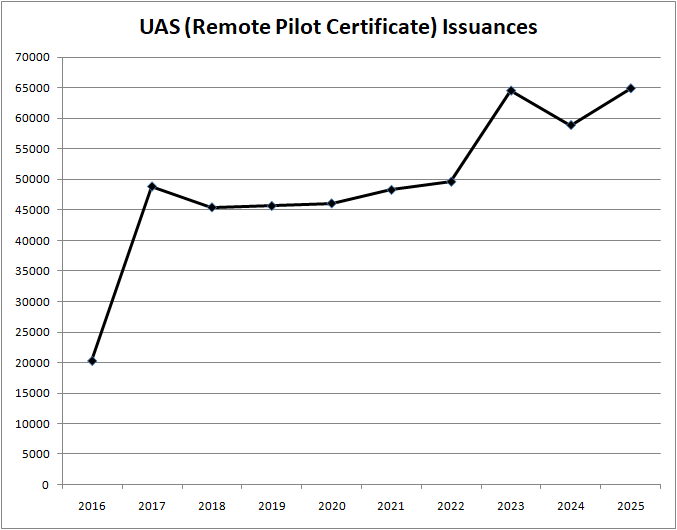
Last year was the highest number of UAS certifications issued since the certificate was first offered in 2016.
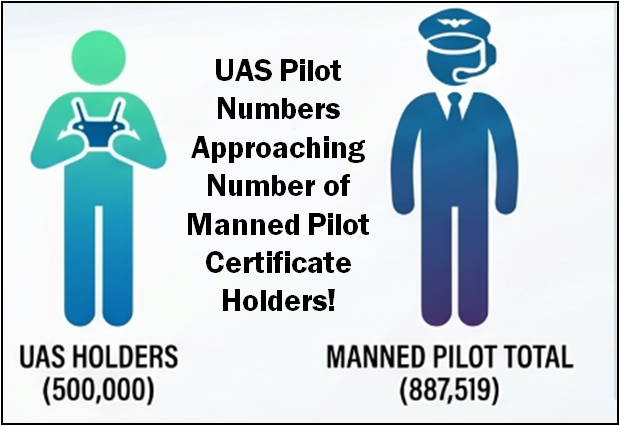
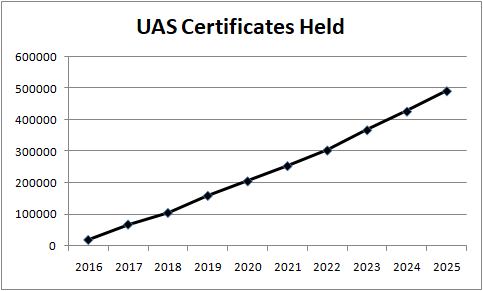
The total number of UAS certificates held is approaching the 500,000 mark as of the end of 2025. To put that in context, our pilot certificate holders number finished out 2025 at 887,519. Many of the UAS certificate holders are also pilots, but many, many are not. If the trend of UAS certificate holders continues, we are going to see the number of UAS certificate holders potentially become greater than that of pilots for “manned” aircraft in the not-too-distant future. What an interesting point in our aviation landscape that is?! Not very long ago, many of us in the aviation industry would not have even thought that the potential for unmanned aircraft would be this significant, let alone that soon we would have more pilots of unmanned aircraft than those of manned aircraft. This will be a fun data point to track in the upcoming years, and it is certainly an indicator of interest and growth in the “drone” sector of aviation.
CFIs who are U.S. Civilians
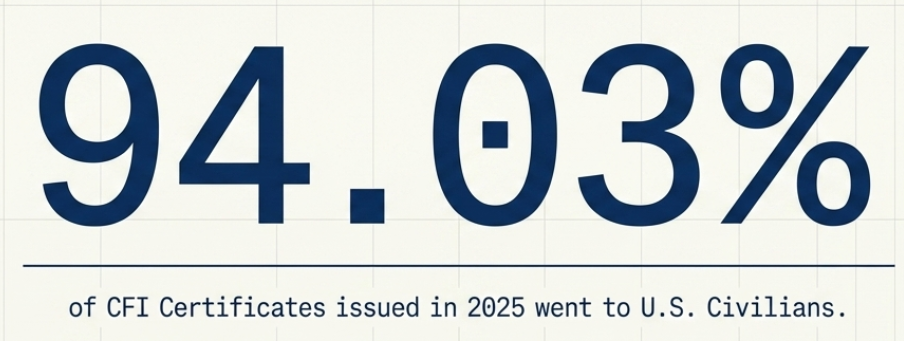
I always find the data point of how many CFIs are certificated each year, that are U.S. citizens versus those that are not, an interesting point.
The CFI certificate remains a place where pilots gain experience to then move on to other professional jobs, many of which require ATP certificates.
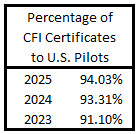
Many training providers in the United States remain actively engaged in providing training for non-U.S. pilots who then go back to their home countries and finish training that allows them to fly in foreign (non-U.S., their home country) airlines.
These pilots to not commonly transition from their private, instrument, and commercial training to becoming CFIs in the United States after that. Many foreign operational environments require much less total flight experience to transition into operating as a professional pilot in their operations, so these pilots don’t need to work here as CFIs to gain that extra experience. It also means that most of the CFIs we are training here, whether they are training U.S. citizen pilots or foreign students, are utilizing the training time they are offering here to those students to build experience toward flight time that is applicable for U.S. pilots who will many times then transition into service as pilots in domestic operations.
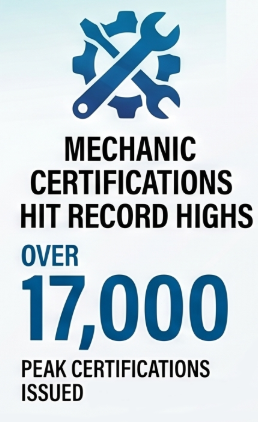
Mechanic Certifications Increasing
A frequent lament of pilots at local airports, especially aircraft owners, is that they are having a hard time finding mechanics. Many older mechanics are retiring.
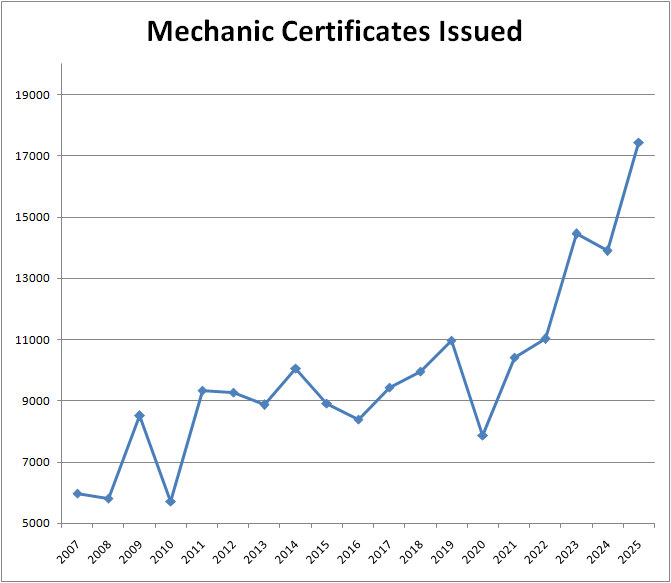
The good news is that, as you can see from the next chart, the number of mechanic certificates being issued each year is increasing.
What this chart doesn’t show us, though, is how many of these newly certificated mechanics are getting certifications to work in any particular sector of aviation maintenance. They could be going to work for large airline operations or local airport mechanic shops. A significant percentage end up actually enticed to go work in completely different fields because the skills they gained in their aviation mechanics training are transferable and valued. I know a couple of large amusement park companies love to hire away aviation mechanics to keep their rides going.
I guess it becomes our job as industry participants to turn at least af few of these each year into light-aircraft afficionados and drag them into helping us keep our GA and training aircraft operating. Mentorship here is key. Getting young mechanics to work alongside those “cranky old GA mechanics” who “know stuff” is important to getting that next generation of mechanics the experience that makes them more than “just parts swappers,” a mantra I hear lamented frequently these days.
Potential pilot shortages affect whether planes will fly, but so do mechanic shortages. If we can’t keep them airworthy, we won’t be able to train the next generation of pilots or fly the planes we have currently in commercial operations.
Let’s be honest with ourselves. The mechanics are the unsung heroes of our industry, too frequently. If it weren’t for them keeping our aircraft maintained, none of us would get to do the cool thing, defy gravity, and fly.