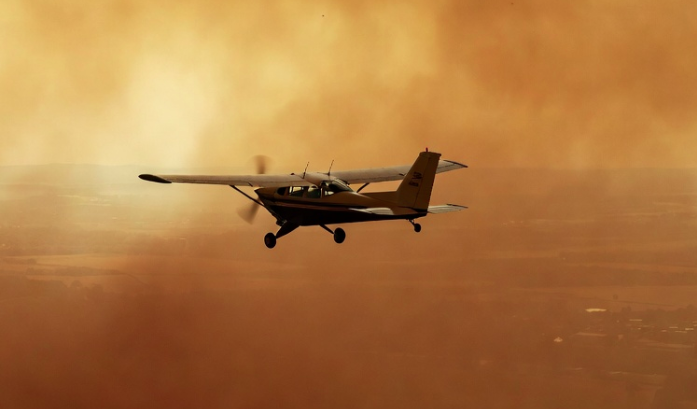
 If you’re a student pilot, instructor, or anyone with a checkride or training flight on the calendar this week in the Upper Midwest, you’ve probably already glanced at the METAR, looked out the window, and muttered something colorful. The sky has that milky, yellow-orange haze. The sun looks like it’s shining through a dirty ashtray. Everything smells like a forest fire that decided to visit. And right there in the weather report—FU.
No, the weather gods aren’t literally typing profanity at you. In the international language of METARs, FU is the code for smoke. It comes from the French fumée. When smoke is reducing visibility to six statute miles or less (and sometimes when it’s just hanging around being a pain in the ass), the METAR sticks FU in the weather phenomena section or remarks. You’ll see it alongside HZ for haze when the air gets thick with fine particulates from wildfires.
Right now—mid-July 2026—that smoke is pouring south out of western Ontario and northern Minnesota fires. Dozens of blazes, some massive, some out of control, are feeding a plume that has turned large parts of Michigan, Minnesota, Wisconsin, and points east into a hazy mess. Air quality alerts cover at least 17 states. Michigan and parts of Minnesota have seen hazardous to very unhealthy AQI readings—some spots pushing well over 300 and even spiking past 1,000 in northern Minnesota. Detroit has been among the worst major cities in the world for air quality on some of these days. The smoke isn’t just a local annoyance; it’s a widespread, lingering layer that the high pressure and northwest flow have been parking over the Great Lakes region.
And it’s doing exactly what the abbreviation suggests to a lot of training programs and checkride schedules: F-ing Up the plan.
Why FU actually matters in the cockpit
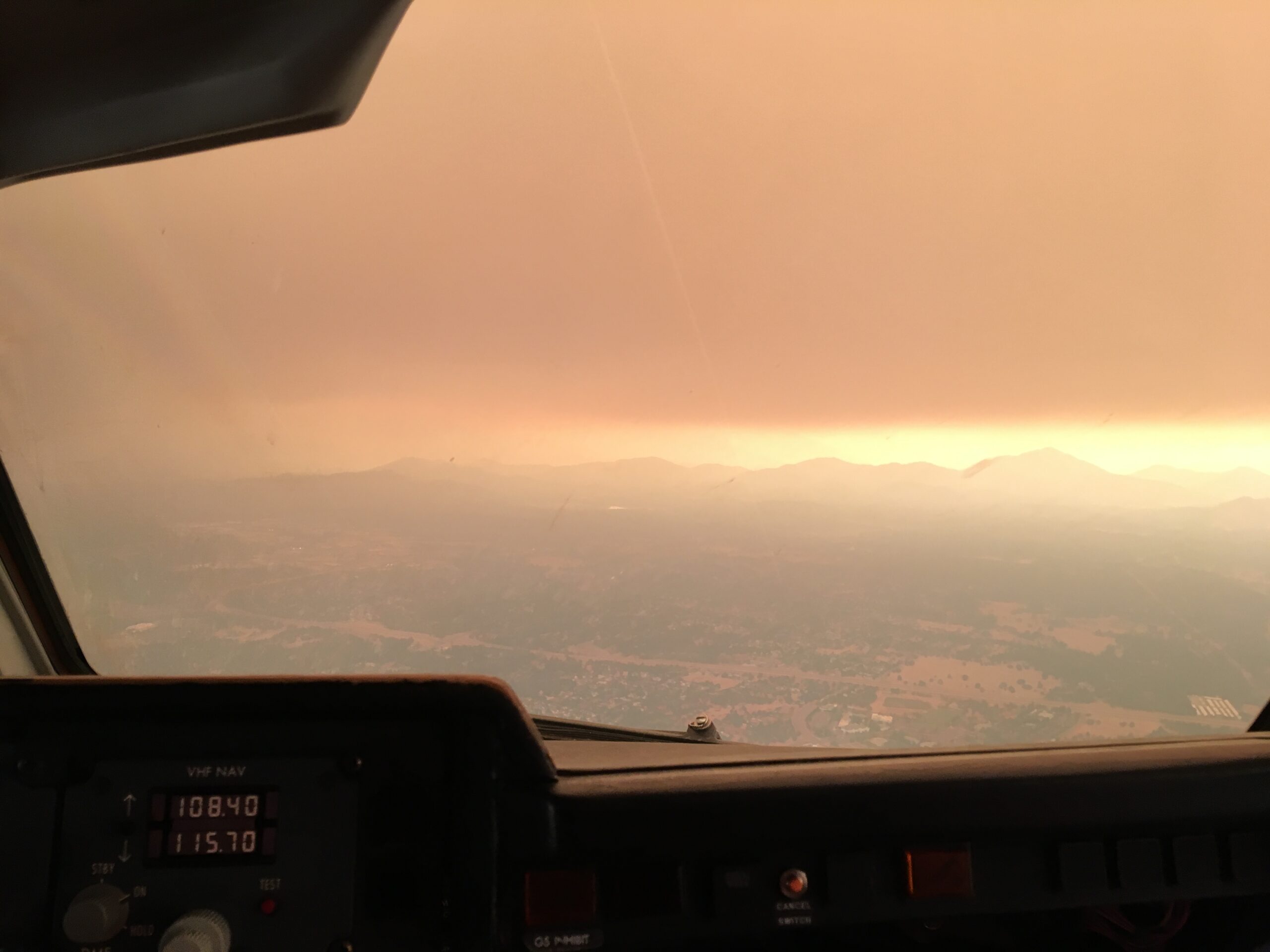
Surface visibility in a METAR is measured horizontally at the airport. That’s useful, but it doesn’t tell the whole story when smoke is involved. Slant-range visibility—the view you actually need to see traffic, spot the runway on final, or maintain visual references in the pattern—is often worse. Smoke scatters light differently than fog or mist. It can sit in layers, get trapped under inversions, and turn what looks like “6SM HZ/FU” on the ground into something that feels like flying through thin soup at pattern altitude.
For VFR training and checkrides, this creates real problems:
- Traffic spotting becomes a guessing game. In the practice area or on a cross-country, you’re relying on see-and-avoid. Hazy smoke kills contrast. That Cessna you should have seen at three miles is now a gray ghost until it’s uncomfortably close.
- Pattern and landing work suffers. Judging height, flare, and touchdown in reduced visibility and flat light is harder. Depth perception goes to hell when the horizon is washed out and the runway environment lacks crisp definition.
- Student pilot and solo limitations get tested. Many CFIs and 61.87 endorsements have personal minimums well above legal VFR (3SM visibility, 2,000-foot ceiling). Smoke that keeps the airport reporting 5–7SM but feels worse often triggers a smart “no-go.”
- VFR maneuvers without a horizon. Steep turns, chandelles, lazy-8’s, pretty much any visual maneuvers get really hard to do the right way, looking outside when the visibility is reduced due to smoke. Without at least 8-10 miles visibility, and certainly when visibiity dips below 5 miles, these maneuvers get much harder to do within ACS standards.
- Checkride/Flight scheduling chaos. As a DPE, I’ve lost count of how many rides I’ve had to delay or move because the weather wasn’t just legal—it wasn’t smart. Examiners are supposed to evaluate judgment as much as stick-and-rudder skills. Launching into marginal smoke just to “get it done” is the opposite of good judgment. I know lots of CFIs are working on reschedules with their students this week also. Rescheduling sucks for everyone, but bending minimums or personal comfort levels sucks more.
IFR pilots and aircraft aren’t completely immune either. Smoke can extend to surprisingly high altitudes, create its own turbulence or pyrocumulus if fires are active enough, and just generally make an already busy IFR day more tiring. Plus, nobody wants to breathe that crap for hours on end. I honestly have no idea how bad it is for the aircraft either, which needs air to breathe as part of the combustion process that keeps our engines going. Does anyone have any thoughts on that? Share it here please, if you do.
The current Upper Midwest reality check
This isn’t some distant western fire season problem that only affects California or Idaho. The fires in Ontario (one of the big ones over 130,000 acres) and northern Minnesota are close enough that the smoke is dropping right on top of us with minimal dilution. On bad days you can smell it even inside hangars. The sky takes on that apocalyptic glow that makes sunset photos look dramatic but makes actual flying feel stupid.
Air quality agencies are telling people with respiratory issues to stay inside. Pilots should be paying attention too. Fine particulate matter (PM2.5) doesn’t just stay outside the airplane. And while a single training flight in light smoke probably won’t kill you, repeated exposure or pushing into visibly deteriorating conditions isn’t the kind of risk that builds good habits.
TAFs and METARs around the region have been showing FU, HZ, or just plain reduced visibility in spots. Some airports stay VFR on paper while the practical flying conditions are marginal at best. That disconnect is exactly why you have to look at more than just the visibility number—satellite smoke maps, AirNow, pilot reports, and your own eyeballs out the window all matter.
So what do you do when the sky says FU?
First, don’t treat it like a personal insult. The weather doesn’t care about your checkride date or your student’s 90-day solo clock. It cares about physics and fire behavior. Plan for it.
- Pull the smoke forecasts and satellite imagery early. These events can linger or shift with the next front.
- Have honest personal minimums and be willing to use them. “Legal VFR” and “smart VFR in smoke” are not the same thing.
- Use the downtime productively—ground lessons, simulator sessions, systems review, or even just a frank talk with your CFI or examiner about decision-making in degraded visibility.
- If you’re the instructor or DPE, model the behavior you want to see. Canceling or delaying because conditions suck isn’t weakness; it’s professionalism.
And yeah, sometimes you just have to laugh at the cosmic joke. The abbreviation really does feel like the sky is giving you the finger this week. Mother Nature has a dark sense of humor, and right now she’s using Canadian wildfires to deliver it straight to the Upper Midwest.
The good news? These smoke events move. Fronts come through, winds shift, and eventually the air clears. Your checkride or training block will happen—just when the smoke clears.
Hopefully, the FU will clear soon, and we will all be back to some good flying. Certainly, hopefully before next week for Oshkosh EAA AirVenture 2026!
Good article Jason! Thanks for sharing.